

UNESCO by the Sea: Exploring Croatia’s World Heritage Sites from the Deck of a Yacht

Croatia’s UNESCO World Heritage Sites
Croatia is a living museum. For thousands of years, empires have battled over this breathtaking stretch of the Adriatic coast, leaving behind an astonishing legacy of Roman palaces, Venetian fortresses, and medieval walled cities. While land-based tourists spend hours navigating crowded highways and packed coach buses to glimpse these historical marvels, luxury travelers know a better way.
Approaching Croatia’s UNESCO World Heritage sites from the sea completely redefines the experience. It allows you to trace the exact nautical routes of ancient Greek merchants and Venetian admirals, arriving at these monumental cities exactly as they were designed to be seen—from the water. A private yacht charter offers the ultimate luxury: the ability to step directly from your aft deck into centuries of history, exploring ancient labyrinths before retreating to the absolute privacy of your floating sanctuary.
Split: Docking at the Steps of Diocletian’s Palace
Your historical voyage often begins in Split, home to one of the most extraordinary Roman ruins on earth, Diocletian’s Palace. Built in the 4th century as a retirement fortress for the Roman Emperor, this massive, alabaster-stone complex is entirely unique because it was never abandoned. Today, it forms the beating, vibrant heart of Split's Old Town, housing thousands of residents, chic boutiques, and hidden cafes within its ancient colonnades.
For charter guests, the arrival is unmatched. Your yacht can secure a berth right along the iconic Riva promenade. From the passerelle, you are literally footsteps away from the Bronze Gate of the palace. You can spend your morning wandering through the subterranean cellars and marveling at the Peristyle square, and by lunch, you are back aboard your yacht, enjoying a bespoke meal prepared by your private chef while looking out at the city's ancient skyline.
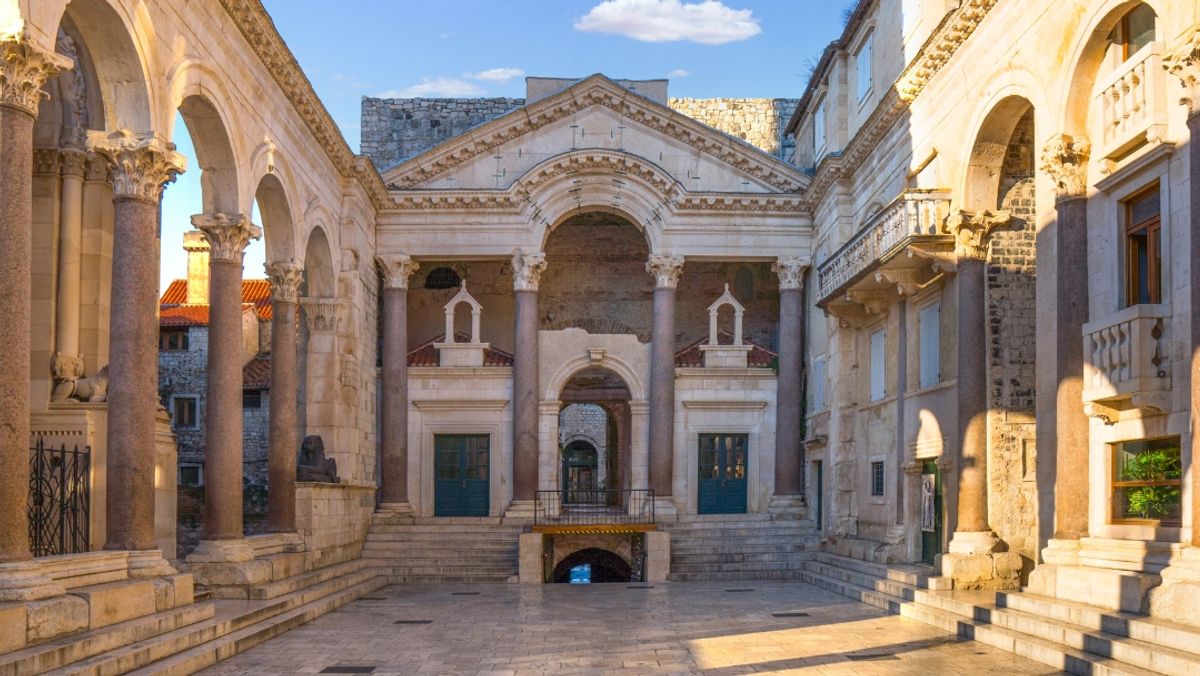
Diocletian's Palace peristyle in Split, Croatia showcasing ancient architecture
Trogir: The Medieval Island Labyrinth
Just a few nautical miles from Split lies Trogir, a pristine UNESCO-listed town situated entirely on a tiny island connected by bridges to the mainland and the island of Čiovo. Often referred to as the "Little Venice of Dalmatia," Trogir is a perfectly preserved jewel box of Romanesque, Gothic, Renaissance, and Baroque architecture.
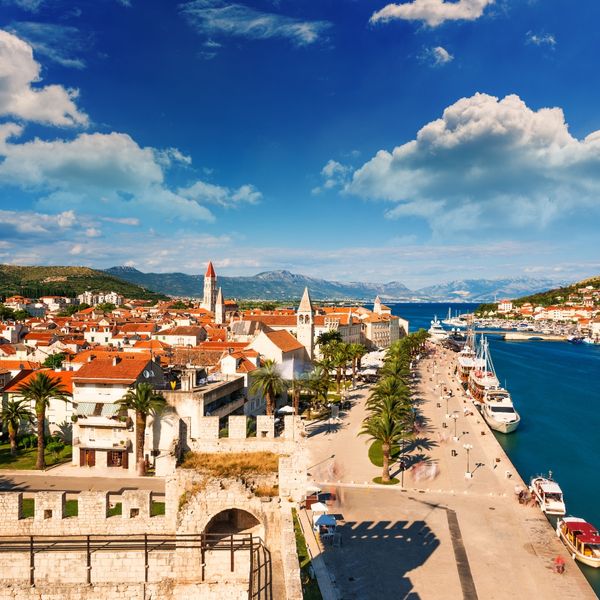
Navigating the narrow channel into Trogir feels like sailing onto a movie set. Yachts moor directly along the palm-lined waterfront, under the imposing gaze of the 15th-century Kamerlengo Fortress. Stepping ashore, you enter a dense maze of polished stone alleyways. The crown jewel is the Cathedral of St. Lawrence, featuring a masterpiece portal carved in 1240 by Master Radovan. Because Trogir is so compact, it is the perfect port of call for a relaxed afternoon of historical exploration followed by an evening cocktail on the flybridge, watching the sunset illuminate the town's ancient bell towers.
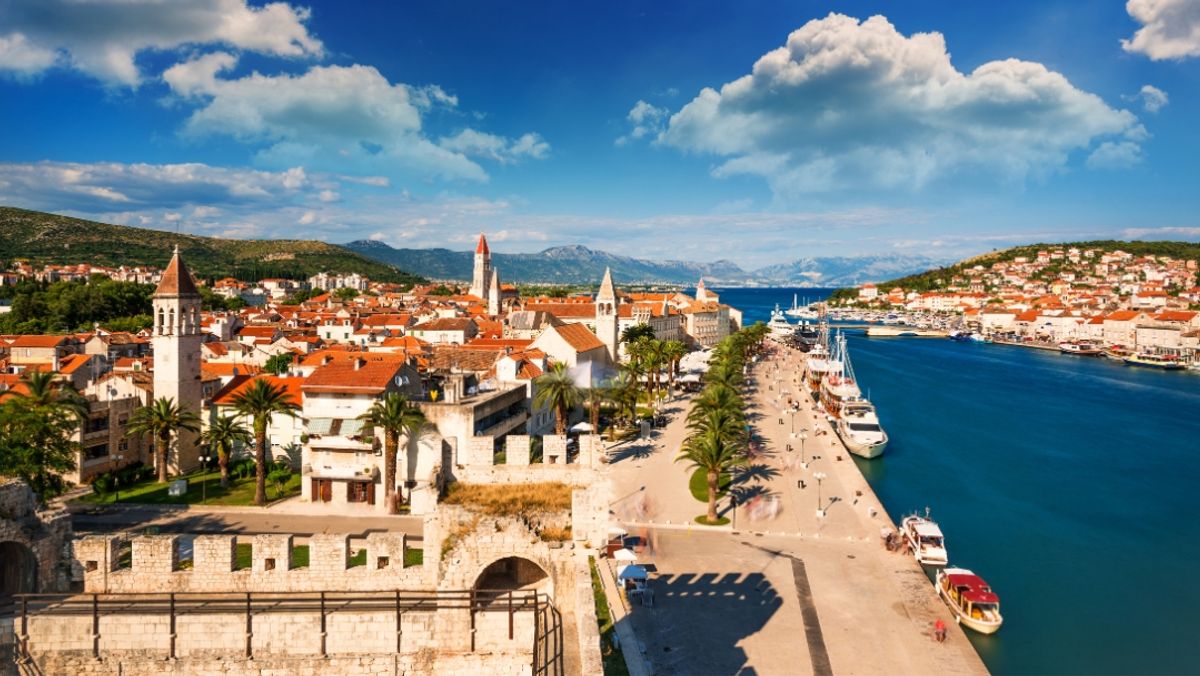
Beautiful view from Trogír fortress, Croatia, Dalmatia
Šibenik: The Dual UNESCO Marvels of the Krka River
Cruising north into the Šibenik archipelago reveals a city that boasts not one, but two UNESCO World Heritage sites. Unlike Split or Trogir, which were founded by Greeks or Romans, Šibenik is the oldest native Croatian town on the shores of the Adriatic, perched dramatically on the steep banks of the Krka River estuary.
The approach by sea requires navigating the winding St. Anthony’s Channel, guarded heavily by the fearsome St. Nicholas Fortress, your first UNESCO site. This triangular, sea-bound fortress is a marvel of Venetian military engineering, designed to repel Ottoman fleets. Once docked in the city’s deep-water harbor, you can walk up through the terraced stone streets to the Cathedral of St. James, your second UNESCO site. Built entirely of stone without a single piece of wood or brick, its mesmerizing dome and the frieze of 71 sculpted faces make it one of the most significant architectural achievements in the Mediterranean.
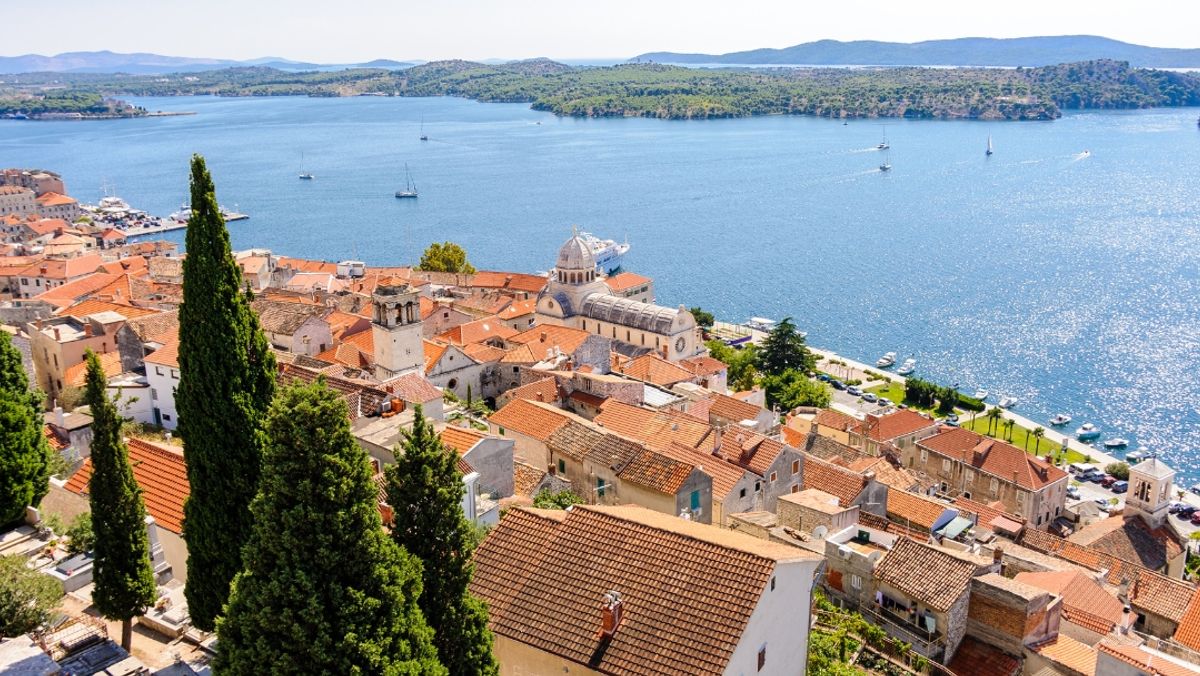
Aerial view of Sibenik
Hvar’s Stari Grad Plain: A 2,400-Year-Old Vineyard
When yachts set course for the island of Hvar, the focus is usually on the glamorous beach clubs and the towering Spanjola Fortress of Hvar Town. However, sailing to the northern side of the island to the deep, protected bay of Stari Grad reveals a completely different, profoundly ancient UNESCO treasure, the Stari Grad Plain.
This fertile agricultural valley was colonized by Ionian Greeks from Paros in the 4th century BC. Astoundingly, the original geometric land division they created, separated by ancient dry-stone walls, remains virtually intact today. It is the oldest continuously cultivated agricultural landscape in the world. From the harbor of Stari Grad, one of Europe’s oldest towns, your charter crew can arrange luxury cycling tours or private wine tastings through the plain, allowing you to drink wines made from the exact soil that the ancient Greeks cultivated over two millennia ago.
Dubrovnik: The Formidable Walls of the Adriatic
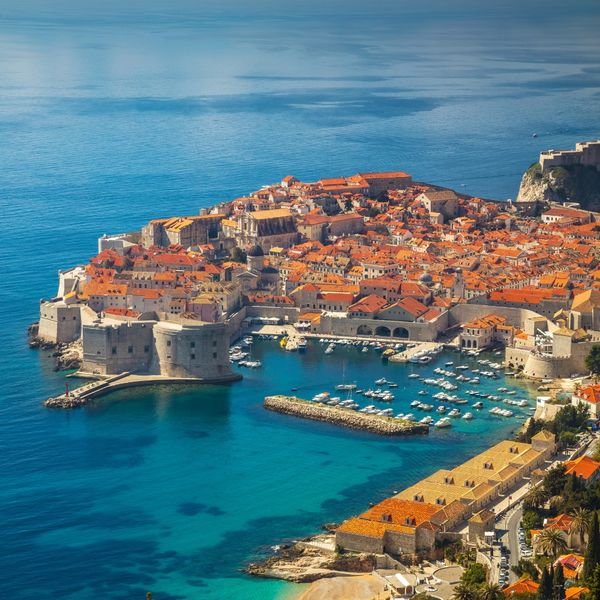
No historical itinerary is complete without a voyage to the extreme south of Dalmatia to witness the awe-inspiring walls of Dubrovnik. The "Pearl of the Adriatic" was once the center of the Republic of Ragusa, a sophisticated maritime state that rivaled Venice in wealth and diplomatic power. Its iconic, two-kilometer-long ring of defensive walls encloses a sea of terracotta roofs, baroque churches, and polished marble plazas.
Arriving at Dubrovnik by sea is a deeply cinematic experience. As your yacht rounds the Elaphiti Islands and the massive, fortified walls come into view, the sheer scale of the city is breathtaking. While large vessels utilize the nearby ACI Marina or the port of Gruž, the tender ride to the Old Town port offers the exact perspective of arriving merchant galleons from centuries past. Exploring the city's ramparts early in the morning, before returning to your yacht to sail the pristine, pine-scented islands offshore, perfectly encapsulates the elite freedom of a Croatian charter.
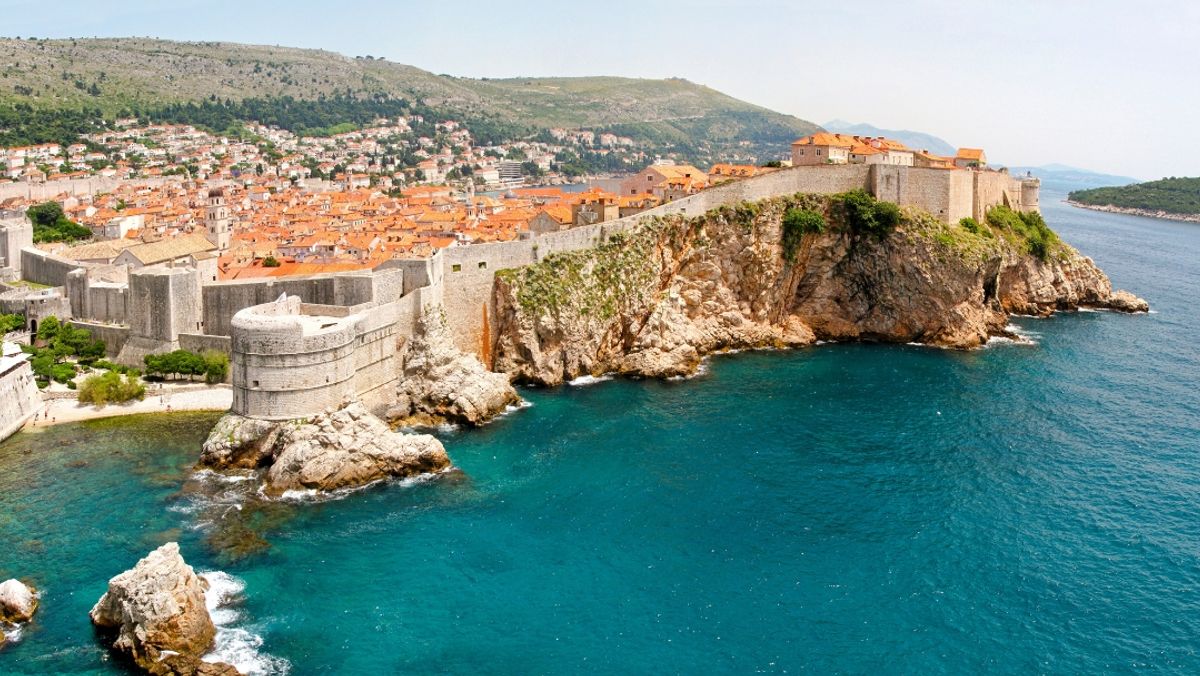
Panoramic aerial photo of old Dubrovnik walls.
The Luxury of Time and Seamless Access
The greatest advantage of touring Croatia’s UNESCO sites by yacht is the complete elimination of logistical friction. You do not have to pack and unpack, manage ferry timetables, or fight for parking in ancient towns. Your five-star hotel travels with you.
Furthermore, a yacht grants you the luxury of time. You have the flexibility to visit the breathtaking Cathedral of St. James in the quiet of the morning or walk the labyrinth of Trogir late at night when the stone streets are empty and echoing. It is an immersive, elegant, and entirely personalized way to experience the profound historical legacy of the Adriatic.

Ready for an Unforgettable Yacht Charter in Croatia?
At All Blue Yachting, our expertise comes from genuine experience at sea. Many of our brokers have lived and worked aboard yachts themselves, giving them first-hand insight into every aspect of the charter experience.
From your initial enquiry to the final day of your journey, we’re here to guide you through every step with trusted advice, personalised recommendations, and seamless support throughout your charter.
- We take the time to understand your vision and bring it to life.
- We handpick the finest yachts tailored to your preferences.
- We manage all paperwork and secure transactions for complete peace of mind.
- We design personalised itineraries built around your travel style.
- We support you every step of the way, from enquiry to final accounts.